

Most office style advice starts with adding more: another layer, another accessory, another piece that is supposed to make the outfit feel more polished.
There is another approach. Pick one strong idea—a proportion, print, texture, or unexpected contrast—and let the rest of the outfit support it.
That is the thread connecting these looks. Some lean tailored, some softer, some more playful, but each one starts with a single styling decision rather than a pile of separate ideas.
Explore AKIRA’s Officewear collection for more pieces built around the same mix of tailoring, statement details, and modern workwear.
Rule 1: Play With Proportion
One of the easiest ways to make officewear feel more intentional is to change the proportions.
A fitted vest creates definition through the waist, while a wider trouser adds volume below. The contrast between the two shapes does more for the outfit than adding another layer ever could.
The same idea works beyond suiting. Pair something narrow with something relaxed, cropped with elongated, or structured with fluid. The goal is not perfect symmetry—it is giving each piece a different role.


Shop the pictured edit:
- Business In The Front Vest
- Business In The Front Trouser
- Business In The Front Button Down
- Azalea Wang Xiomara Yellow Lace Up Stiletto Bootie
Rule 2: Let One Print Carry the Look
A strong print rarely needs another strong print competing with it.
If you are wearing plaid from top to bottom, the print already creates the visual structure. Keep the accessories cleaner and let the pattern stay readable.
That does not mean everything else has to disappear. A belt, boot, or pair of sunglasses can still add shape, but those pieces should support the print rather than fight it.

Shop the pictured edit:
- Plaid Princess Button Down
- Plaid Princess Trouser
- Azalea Wang Amada Chocolate Colorblocked Sporty Bootie
- Out Of Your League Sunglasses
The same rule applies to animal print. Instead of layering multiple statements, let one patterned piece carry the outfit and keep the surrounding shapes cleaner.

Shop the pictured edit:
How bold a print can be at work depends on your workplace dress code, but the styling principle stays the same: when the print is the statement, let the rest of the outfit give it space.
Rule 3: Mix Romantic Details With Structure
Tailoring does not have to stay severe, and romantic details do not have to stay sweet.
Putting the two together creates tension in the outfit: a sharp blazer against lace, a tie against softer fabric, or a bow blouse paired with cropped tailored trousers.
The contrast works because the pieces are doing opposite jobs. Structure grounds the softer details; lace, bows, and puffed sleeves keep the tailoring from feeling too rigid.

The source did not include reliable individual product links for this look, so browse more structured and feminine combinations in AKIRA’s Officewear collection.
A second way to use the same idea is to make the romantic detail part of the blouse itself, then keep the bottom tailored.

Shop the pictured edit:
Rule 4: Give Structure Some Movement
Tailored pieces look more dynamic when something in the outfit can move.
A fitted bodice paired with a pleated or flared skirt is an easy example. The upper half stays controlled, while the lower half adds movement and changes the silhouette as you walk.
That balance can keep a structured outfit from feeling visually stiff.

Shop the pictured edit:
- Style And Grace Mini Dress In Plaid
- Hands Off Poplin Blouse
- Classy Girl Bag
- Azalea Wang Viviennea Brown Plaid
- Layered Cutie Ruffle Socks In Grey
You can use the same rule with separates. A peplum vest brings structure through the torso, while a longer skirt gives the lower half more movement and length.

Shop the pictured edit:
- Lottie Neoprene Peplum Vest In Heather Grey
- Unzip Me Bandage Maxi Skirt
- Azalea Wang Celiane Black Block Heel Platform Bootie
Rule 5: Keep the Tone, Change the Texture
Monochrome dressing gets more interesting when the textures do not match.
A tweed jacket and fluid trouser can sit in the same cream or neutral family while still creating contrast. One is structured and tactile; the other moves more softly.
That difference is what keeps a tonal outfit from looking flat.
You can use the same idea with other combinations: smooth against textured, matte against shine, tailored fabric against something softer, or woven material against leather-inspired finishes.
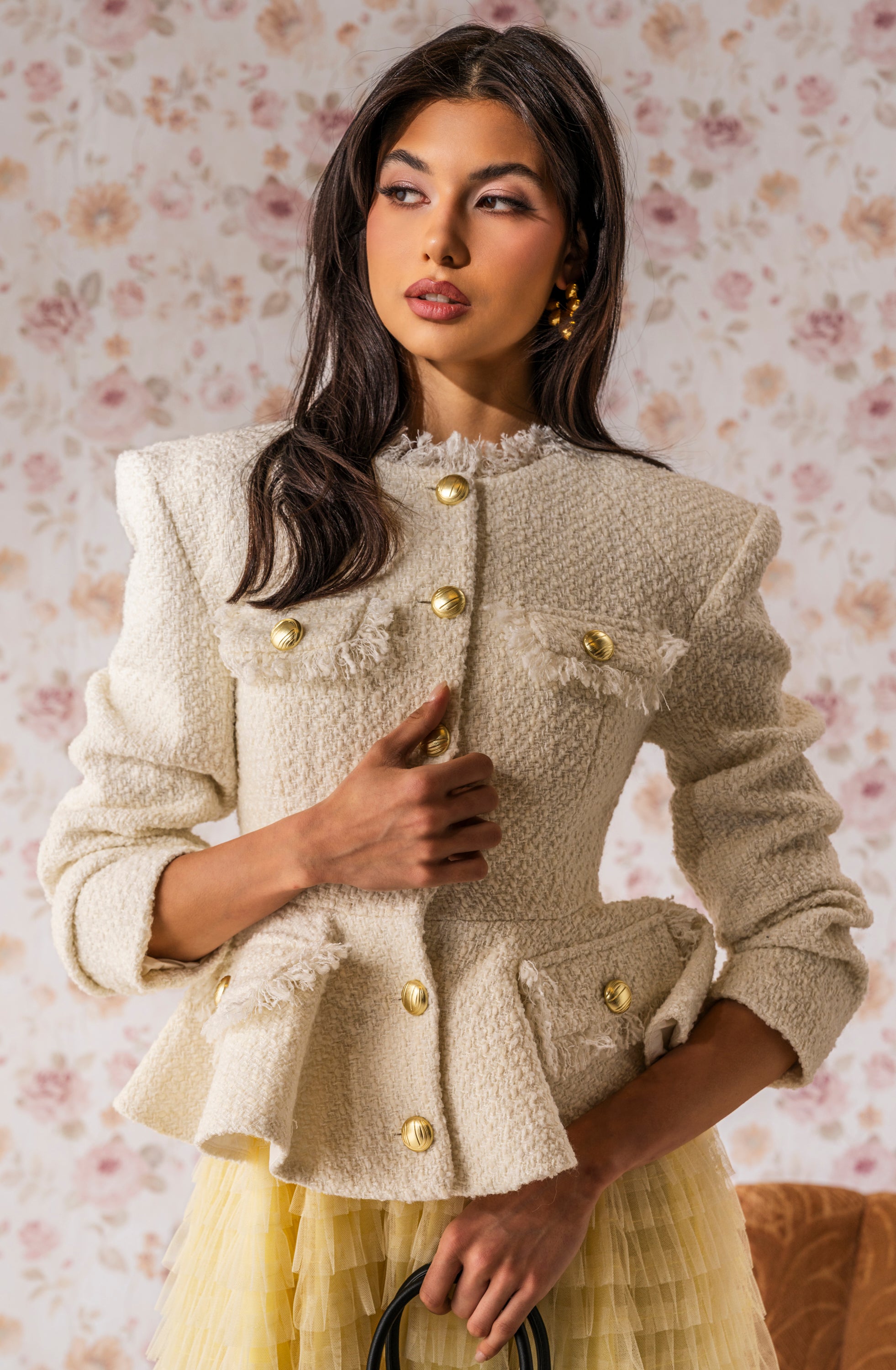
Shop the pictured edit:
- Mallorca Tweed Blazer
- Drifting Away Pleated Trouser
- Time To Get Serious Blouse
- Office Baddie Woven PU Balloon Pant
- Azalea Wang Emanuela Black Novelty Sling Back Pump
- Cool Girl Necklace
Rule 6: Let One Detail Replace the Extras
Sometimes the detail is already doing the work of an accessory.
An oversized collar, built-in tie, dramatic sleeve, strong shoulder, or unusual neckline can become the focal point of the entire outfit.
When that happens, adding another necklace, another layer, and another statement piece can dilute the effect rather than improve it.
The better move is often subtraction: let the detail stay visible and allow the rest of the outfit to support it.

Shop the pictured edit:
Don't Forget the Finishing Details
Once the main styling idea is clear, accessories should reinforce it rather than introduce a completely different outfit.
A stronger necklace can work beneath a clean collar. An unusual bag can bring personality into traditional tailoring. Shoes can add texture, print, or shape without requiring another clothing layer.
The point is not to choose the safest accessory. It is to choose one that supports the decision you already made.

Shop the pictured edit:
Shop the pictured edit:
- Layered Cutie Ruffle Socks In Grey
- Azalea Wang Viviennea Brown Plaid
- Azalea Wang Brun Brown Snake Wedge Boot
- Azalea Wang Fire String Plaid Sporty Pump
- Azalea Wang Emanuela Black Novelty Sling Back Pump
Office Outfit Styling FAQs
How do I make an office outfit feel more fashion-forward?
Start with one intentional styling choice rather than adding several statement pieces at once. That could be an exaggerated proportion, a stronger print, contrasting textures, or one unusual detail.
Can bold prints work for office outfits?
They can, depending on your workplace dress code. A simple silhouette and restrained accessories can make a bold print feel more deliberate and easier to integrate into workwear.
Do office outfits always need a blazer?
No. Structure can come from many places: a fitted vest, peplum shape, strong collar, tailored trouser, or sculptural top can all create definition without relying on a traditional blazer.
How do I mix textures without making an outfit feel too busy?
Keep another element consistent. If the textures are different, repeat a similar color. If the colors are different, keep the silhouette relatively clean. You usually need one point of connection for the contrast to feel intentional.
How do I style a monochrome office outfit?
Use different textures and shapes within the same color family. A structured jacket with a softer trouser, or a smooth blouse with a more tactile skirt, creates depth without requiring more color.
How do I know if an outfit works for my workplace?
Use your workplace dress code and environment as the final filter. The styling ideas here can be adapted with more or less coverage, stronger or quieter prints, and different footwear depending on what is appropriate where you work.
Build the Look Around One Strong Choice
The easiest way to keep officewear from feeling predictable is not necessarily to add more. It is to make one decision and commit to it.
Change the proportion. Let one print lead. Put soft details against sharp tailoring. Mix textures inside the same color family. Or choose one strong detail and leave everything else alone.
Explore AKIRA’s Officewear collection to find more tailoring, dresses, shoes, and accessories to build the idea around.


